
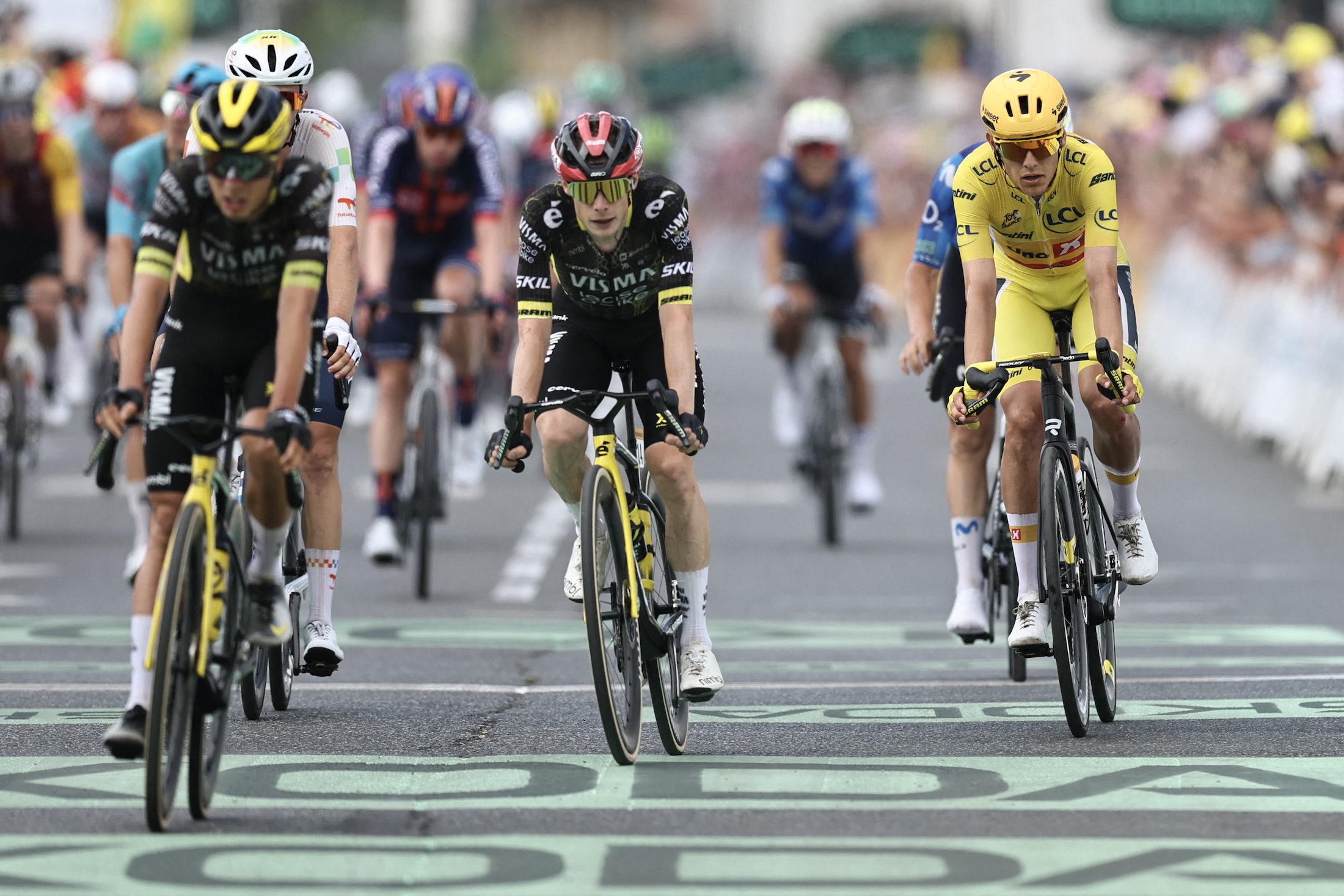
This July, the cycling world has been shaken yet again by another horrific injury. Jonas Vingegaard, the main contender for the Tour de France second place, Pogacar’s greatest rival, took a big fall and broke his clavicle. So, I’ve decided to take a closer look at this injury that we see so often in cycling.
The collarbone or clavicle is the bone that connects the shoulder blade to the main body, or more specifically, the sternum. It’s the only long bone in the human body that sits horizontally and it permits the upper limbs, the arms, to move freely. It’s S-shaped and it is made of three main parts, of which the most frequently broken is the middle third, exactly in the middle of the collarbone. A lot of important muscles, like the deltoid, the trapezius and the sternocleidomastoid are connected to the clavicle.
The most common causes for fractured collarbones are falls directly onto the shoulder, often related to sports incidents and traffic accidents. Symptoms often include pain, tenderness at the site of the injury, and decreased ability to move the affected arm. The diagnosis is usually confirmed after an X-ray.
A broken clavicle can be treated both surgically and non-surgically. The non-operative method consists of putting the arm in a standard sling for three to four weeks, even though it can take up to five months for the strength of the bone to recover. That’s why most athletes choose the operative way, which implicates stabilizing the fracture with plates and screws or with intramedullary rods, that go through the inside of the bone, where the marrow is stored. It takes less for them to return to training like this.
In cycling, the collarbone fracture represents up to 45% of all bicycle-related fractures. They are so common that they have become more of an occupational hazard, although they can lead to serious complications. For example, just like it happened to Vingegaard in 2024, a broken clavicle can cause a pneumothorax or a collapsed lung.
Other famous cyclists that have suffered a fractured collarbone are Tyler Hamilton, who finished the 2003 Tour de France with a severe double-fracture (and he still got fourth place), Lance Armstrong, Mark Cavendish, Marianne Vos, and Egan Bernal (who returned just six days later).
All in all, I hope that this was helpful to all those who were curious about what this injury means and I just want to say a nice “Stay safe!” to all the cyclists out there, because you never know when the Gr. Maillot Broken Collarbone catches you in the breakaway.
TAGS: brokencollarbone clavicle collarbone cycling injury JonasVingegaard sports TourdeFrance
Leave a Reply